Showing posts with label e-book. Show all posts

Tuesday, January 20, 2009

Green Tips ..help our earth


It’s easy to protect the planet! These tips help save energy. So get green and give the tips a try. If u r a kid.... Make sure to ask your parents before trying any of these tips!

Conserve resourches
Turn off the water while brushing your teeth.

It’s easy to protect the planet! These tips help save limited resources such as water and energy. So get green and give the tips a try. Make sure to ask your parents before trying any of these tips!
• Choose locally grown food. Transporting food long distances wastes fuel and creates extra CO2.
• Turn off the water while brushing your teeth.
• Send an e-card instead of a paper card.
• Say "No bag, thank you." Whether you're buying toys, snacks, or clothes, tell the checkout person you don't need a bag. By carrying your own reusable fabric bag, you'll help reduce the estimated 100 million plastic bags that each year clog sewers, entangle birds, and get swallowed by whales, sea turtles, and other wildlife.
• Scrape leftovers off the dishes instead of rinsing them. (Wash the dishes soon after.)
• Take short showers instead of baths. Aim for five minutes—but still get clean!


Drinking Water: Bottled or From the Tap?


  • If your family is like many , unloading the week’s groceries includes hauling a case or two of bottled water into your home. On your way to a soccer game or activity, it’s easy to grab a cold one right out of the fridge, right?

  • Imagine a water bottle filled a quarter of the way up with oil. That’s about how much oil was needed to produce the bottle.

  • So why don’t more people drink water straight from the kitchen faucet? Some people drink bottled water because they think it is better for them than water out of the tap, but that’s not true. In the United States, local governments make sure water from the faucet is safe. There is also growing concern that chemicals in the bottles themselves may leach into the water.

  • People love the convenience of bottled water. But maybe if they realized the problems it causes, they would try drinking from a glass at home or carrying water in a refillable steel container instead of plastic.

  • Plastic bottle recycling can help—instead of going out with the trash, plastic bottles can be turned into items like carpeting or cozy fleece clothing.

  • Unfortunately, for every six water bottles we use, only one makes it to the recycling bin. The rest are sent to landfills. Or, even worse, they end up as trash on the land and in rivers, lakes, and the ocean. Plastic bottles take many hundreds of years to disintegrate.

  • Water is good for you, so keep drinking it. But think about how often you use water bottles, and see if you can make a change.

  • Betty McLaughlin, who runs an organization called the Container Recycling Institute, says try using fewer bottles: “If you take one to school in your lunch, don’t throw it away—bring it home and refill it from the tap for the next day. Keep track of how many times you refill a bottle before you recycle it.”

  • And yes, you can make a difference. Remember this: Recycling one plastic bottle can save enough energy to power a 60-watt light bulb for six hours.

Save Power Play outside instead of using electricity


• Keep those fans buzzing in summer instead of turning on the air conditioner.

• Replace incandescent lightbulbs with compact fluorescent ones. They last up to ten times longer and can use a quarter of the energy.
• Plug electronics into a power strip and flip off the switch when the gadgets aren’t in use. (make sure this won’t mess up clocks and recordings.)
• Commit to turning off your computer before bed each night and before you go out for the day. Also set the computer's sleep mode for when the computer is idle for just a little while. By doing these two simple acts, you will use about 85% less energy each day.
• Switch off the light every time you leave a room.
• Set the thermostat to no lower than 78°F in the summer and no higher than 68°F in the winter.
• Place your desk next to a window and use natural light instead of a lamp.
• Close your curtains to keep out daytime summer heat or keep in nighttime winter warmth.
• Turn off the TV or video game console and play outside.
• Ask Mom or Dad to turn off the car instead of letting it idle while you're waiting.
• Ride a bike or walk instead of using the car.


Strained Glass

Up to 50 percent of the average household's energy consumption goes to heating and cooling the home.

But properly sealed windows can help insulate your home, reducing the energy consumed--and money spent--to maintain indoor temperature.

Here are some ways to up window efficiency:

* Seal all edges and cracks with caulk.

* Install weather stripping in the frame.

* Hang curtains or drapes to limit heat gains in the summer and losses in the winter.

* In harsh climates, install storm windows, which help keep outdoor air from seeping in and indoor air from seeping out.

When It Rains...


During dry months, 40 percent of the average household's water consumption goes to outdoor watering. Rather than needlessly draining that water out of the faucet, gather rainfall in a rain barrel connected to the gutter system and use it to keep the lawn and garden green. Just an inch of rainfall on a 1,000-square-foot roof will accumulate over 600 gallons of fresh water. When picking out a barrel, here are a couple of things to look for:

Choose a model topped with a mesh screen that will keep debris out of the barrel and a lid that prevents mosquitoes from using the water as a breeding ground when it's not raining.

Look for a barrel equipped with a side spigot where a hose can be attached and watering cans can be easily filled. Also, most rain barrels can hold up to sixty gallons of water, so make sure it's parked on a strong and steady surface.


Furry Foes

More than just an eyesore, over 80 strains of mold have been associated with respiratory tract disorders. With the health risks posed by a pesky mold problem, getting rid of furry patches should be top priority. Fortunately, you likely have a potent mold eliminator under the kitchen sink--straight vinegar. Undiluted white vinegar kills 82 percent of mold strains, enough for most problems. Fill a spray bottle, saturate the area, and let it sit. The smell will be a bit harsh, but it typically clears out in a few hours, taking the unsightly respiratory tract-threatening brown patch with it.
For more resilient mold colonies, try a mixture of two teaspoons of tea tree oil and two cups of water. The smell can be overwhelming, and will linger for a few days, but tea tree oil works when nothing else will. Nearly as effective as tea tree oil, grapefruit seed extract (20 drops mixed with two cups of water) will do the trick without the smell.

Clear the Air
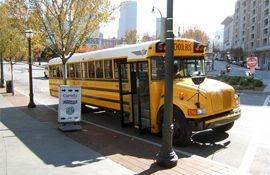
Diesel exhaust from school buses contains asthma-triggering particulates and 40 microscopic chemicals that the Clean Air Act classifies as hazardous air pollutants.

Keeping the air clean is especially important for children--pound for pound, they breathe in more air and more pollutants than adults. You can reduce the problem by lobbying to bring new technologies to your school, like the propane-powered buses developed by Blue Bird Corporation, which eliminate particulates and can halve fuel costs, among other benefits. Diesel buses may also be retrofitted with technologies like diesel particulate filters; for a complete list of verified technologies, see the EPA's website.

If your school district doesn't yet have the resources to make big changes, you can still cut your emissions by reducing idling outside of schools and motivating others to do the same. Turn off the car or put it on standby when waiting to pick up or drop off children, and encourage kids to walk or ride bikes whenever possible (if you're concerned about safety, talk to other parents in the neighborhood about having the kids bike together). You can also work with your school's PTA or PTSA to request a no-idling zone for buses. Airwatch Northwest's Anti-Idling Program has toolkits to help reduce idling in your school, including letters to parents and faculty members and a "No Idle Zone" sign to display in your parking lot.


TOO COOL


Americans are air conditioning addicts. When the weather gets the better of us, we turn our homes and offices into cool and breezy retreats from the sweltering heat. But the cold air comes at a cost. During summer months, half of all energy consumed in the U.S. goes to powering air conditioners, and each year power plants emit 100 million tons of carbon dioxide to meet our AC addiction. Maybe we're too cool for our own good.

As the weather simmers down this summer, adjust the AC relative to the temperature outside--try a setting10 degrees cooler than the day's high temperature. You'll save 3 percent on energy costs for every degree raised over 72 degrees. Or raise the temperature setting even more and turn on a fan. And be sure to draw the blinds and curtains during the sunniest and warmest times of day.

DIY Pesticides

Synthetic pesticides come with an abundance of environmental and health effects. Rather than hiring your local exterminator, give DIY pest control recipes a try.
For ants, spray a mixture of soapy water, or water mixed with citrus oil, on anthills or directly on the ants.
Rid your yard of all stagnant pools of water that provide a haven for mosquitoes to lay their eggs, and keep them off your skin with plant oils, such as geranium, citronella, tea tree and lavender.
If you have a moth problem, treat indoor wood paneling and furniture with cedar oil to help deter them.

Help Others This Holiday Season specially for kids but adults can also do good;

This holiday make the season a little brighter for others. Giving back is a great thing to do all year round, but the holidays tend to bring out the charitable side in most people. Try some of these ideas with your family and make a difference this holiday season.


• Donate to a charitable organization

Invite an elderly neighbor or someone who lives alone to join your celebration (ask your parents first!)

Deliver a meal to a family in need

Write a thoughtful note to someone special

Bring your host a small gift to show your appreciation and offer to help clean up

Donate clothes you've outgrown

Donate food to a local charity or food bank

Volunteer at a soup kitchen

Send a care package to a soldier

Visit hospital patients

Foster a dog or cat

Adopt an endangered animal through a zoo

Shovel snow for a neighbor

Help pick up trash at a local park

Join a church or school group that does community service projects

Monday, January 19, 2009

YOU CAN MAKE A DIFFERENCE

More Than 850 million people go hungry evrey day.
YOU CAN MAKE A DIFFERENCE

The world's frontline organisation fighting hunger
What is Hunger
What causes Hunger

Who are the Hungry

How WFP works to stop Hunger:

http://www.wfp.org/english/

Monday, January 12, 2009

Eat Less - Waste Nothing

FOOD WASTAGE
It is estimated that four million people in the UK cannot afford a healthy diet, with one in seven people over the age of 65 at serious risk of malnourishment.
Seventeen million tonnes of surplus food is dumped on landfills every year.
Of 17 million tonnes of waste food, four million tonnes is edible.The cost of this waste if around £18 billion annually.
Source: FareshareAccording to a 1997 study by US Department of Agriculture's Economic Research Service (ERS) entitled "Estimating and Addressing America's Food Losses", about 96 billion pounds of food, or more than a quarter of the 356 billion pounds of edible food available for human consumption in the United States, was lost to human use by food retailers, consumers, and foodservice establishments in 1995.
Fresh fruits and vegetables, fluid milk, grain products, and sweeteners (mostly sugar and high-fructose corn syrup) accounted for two-thirds of the losses. 16 billion pounds of milk and 14 billion pounds of grain products are also included in this loss.
Food that could have gone to millionsAccording to the US Department of Agriculture, up to one-fifth of America's food goes to waste each year, with an estimated 130 pounds of food per person ending up in landfills. The annual value of this lost food is estimated at around $31 billion But the real story is that roughly 49 million people could have been fed by those lost resources.
"As the millennium draws to a close, memories of the appalling man-made famine in southern Sudan last year are hard to erase. Even as this issue of Field Exchange goes to press, thousands of Angolans teeter on the edge of starvation; pawns in a long and brutal civil war over which they have little control. Famines have occurred with monotonous frequency throughout the 20th century despite enormous technological, economic and social advances - the Ukraine famine in the 1930s, the Bengal and Dutch famines of the 1940s, the great China famine of the 1950s, Biafra in the late 1960s, famines in Bangladesh, Ethiopia, Somalia and Sudan in the 1970s-90s. There are many others, though perhaps lesser known. What most of these famines have in common is a shared cause; they were all created by man. Some of the man-made famines of this century are described below. The accounts are stark, harrowing and shameful. Yet their causes and impact bear striking similarities to the famines of today." Fiona WatsonInstitute of Child Health
More than 11 million boys and girls under five years of age die every year in the Third World from diseases that are largely preventable. That means more than 30,000 every day, 21 every minute, and almost a thousand since this rally began, about 45 minutes ago.
"By the end of 1998, the Third World's external debt amounted to 2.4 trillion dollars,that is, four times the total in 1982, only 18 years ago."
"Between 1982 and 1998, these countries paid over 3.4 trillion dollars for debt servicing;
in other words, almost a trillion dollars more than the current debt. Far from decreasing,
the debt grew by 45% in those 16 years."
"Life expectancy in sub-Saharan Africa is barely 48 years. That is 30 years less than in the developed countries.
The Richest 16% of the World Uses 80% of Earth's Natural Resources
That's the estimated toll the wealthiest populations on the globe -- the United States,
Europe and Japan -- are taking from the earth's natural bounty to sustain their way oflife. In the U.S. alone, says Emily Matthews of the World Resources Institute, everyman, woman and child is responsible for the consumption of about 25 tons of rawmaterials each year.


How many people go to bed hungry? "More than 820 million people in the world suffer from hunger; and 790 million of them live in the Third World."


More than 800 million people still suffer from hunger or diseases associated with undernourishment, the UN Food and Agriculture Organization said in its annual report.


5 Easy Ways to Reduce Food Waste:

http://www.nidokidos.org/5-easy-ways...te-t27862.html
so after reading this think once .......vth out ur knowledge u may help people who suffer for food........thanks


Sunday, November 30, 2008

Lets Salute Our TWO BraveHeart Heroes...|Mumbai|

India Salutes You...
November 29, 2008
It was a heart-rending scene at the Bangalore ISRO layout home of Major Sandeep Unnikrishnan, who fell to terrorists' bullets while saving many a lives at the Taj Hotel in Mumbai.

NSG commandos wrap the body of Major Sandeep Unnikrishnan with the National Flag.
NSG DIG Rajiv Tandon sprinkles 'Ganga Jal' on the body of NSG hawaldar Gajendra Singh at NSG headquaters in New Delhi on Saturday. He perished at the Nariman House
NSG officials carry the coffin of Gajendra Singh.

Salutations from bottom of my heart to all these brave soldiers and commandos and police officers and their families. It's a great effort and congratulations to them on securing release of several hostages safely...I pray for all those who have lost their lives....May their souls rest in peace

Friday, November 14, 2008

Carrot Burfi

Ingredients :

1 cup grated carrot

1/2 litre milk

5 tbsp ghee

1 cup grated coconut

1 cup sugar

1/2 cup cashew nuts

Cooking Instructions:

Fry separately the grated carrot and grated coconut without using oil or ghee.

Boil the milk with sugar until later dissolves. Keep stirring.

Mix the fried carrot and coconut and again stir. It should become thick.

When it is cooked well, add the cashew nut pieces.

Apply ghee on a tray and put the mixture in it.

Cut it into pieces when cool.

Carrot burfi is ready to serve.

Chicken Rasam

Today's Recipe Of the Day is Chicken Rasam.

Ingredients:
1 small chicken (fry a little in the open fire take out only inner portions cut into small pieces)
2 tbsp ghee
1 tsp lemon juice Salt as per taste


Grind into paste:
1 cup onion, chopped
1 tsp dhania
2 garlic flakes
1/2" ginger
2 cloves
2 cardamoms
1/2 tsp aniseed
1/2 tsp poppy seeds
1/2 tsp turmeric powder
1 tsp red chilli powder


Method:
Heat ghee in a pan.
Add the grounded masala and let it cook for 5-6 minutes.
Add chicken pieces with 1 litre of water.
Boil for some time.
Add salt and lemon juice.
Serve hot.

Now chicken rasam is ready to eat. Enjoy!!!!!!!

how to stay young and healthy

here are some tips for ld beautiful an glamorous girls
  • Cleaning the face: One should wash face 5-6 times a day. This helps in cleaning of the dirt accumulated on the face and gives freshness.
  • Protecting eyesight: Fill your mouth with water, close the eyes and sprinkle water on them about 10-15 times. Gently rub the eyelids and give a tender massage to the eye balls. Staying up late in the night and sleeping after sunrise is harmful for the eyes.
  • Drinking a glass of water: After this one should take a glass of water. This helps in the smooth passing of stool and urine. Make it a regular habit to drink 10-12 glass of water everyday. Warm water is especially good for regulating elimination and cleansing toxins from the physiology.
  • Cleaning teeth: The twig of neem or babool should be used for cleaning the teeths. Scraping the tongue: Tongue should be scraped regularly otherwise it gives rise to foul smells. Scrapets made of copper, steel or plastic can be used.
  • Gargling: Til oil gargling is good for jaws, depth of voice and good taste for food. By doing this type of gargling one never gets cracked lips, bad odour, sore throat and toothache. Bathing: Bath removes dirt, sweating and fatigue and brings freshness to the body. Before bath Til oil massage is very beneficial for skin and body.
  • Application of oil: One who applies Til oil on his head regularly does not suffer from headache, baldness or graying of hair. It is also beneficial for applications in nose and ears and makes the skin soft and smooth. Exercise: Physical exercise and Yoga Asans bring lightness to the body, ability to work, stability and stimulate the power of digestion.
  • Hair and nails: The dressing and cutting of hair, mustaches, beard and nails of hand and feet, add cleanliness and beauty to one's personality.
  • Food: Ayurveda recommends vegetarian foods which gives more nourishment to the body than the non-vegetarian foods. Simple food makes the body strong and discords diseases. Overeating may cause obesity and may invite diseases.
  • Night meals: Food should be taken 2-3 hours before going to bed. This will help in proper digestion of food.

Monday, November 3, 2008

save your face and skin!!

Read these simple and easy tips to save your face and skin!!
1) Drink at least 8 glasses of water every day.
2) Cut some beet root into small pieces and grind them. Squeeze juice from beet root and massage to your face for 5 minutes. Shower after 10 minutes with mild soap or gram flour.
3) Mix sandalwood powder with rose water and add 4 to 5 drops of milk in it and apply on to your face and body. Shower after 15 minutes with warm water.
4) Mix honey in water and drink daily in the morning to keep your skin shiny and smooth.
5) Warm honey and mix with lemon juice and apply on to face. Wash after it dry.
6) Mix Turmeric, sandal powder and olive oil and apply to body. Shower after 10 minutes.
7) Massage your skin with milk. Milk has moisturizer, it will keep your skin smooth.Use humidifiers and keep room temperature moderate to keep your skin away from dryness.
9) Hot water blushes your skin and you don't feel fresh unless you have bath with little cold water. If you have shower for a longtime, dead skin will be automatically be removed. Do not rub with towel, be gentle on your skin.
10) Take food which contains more A and C vitamin.
11) Grate carrot and boil. Massage that mixture to body to get fair and smooth skin.
12) For natural bleaching: - mix milk and lemon juice. The milk will break as soon as you mix the lemon juice in it. Use that mixture to massage on your body. It works as natural bleaching.
13) Mix turmeric and cream on the top of milk, massage that mixture to body.
14) If you go into sun your skin will lost the fair ness. To get your skin color to normal take equal quantities of cucumber juice and tomato juice and apply on to skin. Shower after 10 minutes.
15) Massage mustard oil to your skin for 5 minutes and have shower with gram flour or mild soap.
16) Mix cream on the top of milk and all-purpose flour and apply that paste on to your skin avoid eyes, eyebrows and lips. Shower after 5 minutes. This will make skin smooth.
17) Mix curds (yogurt) with wheat flour and apply to your skin and take shower after 5 minutes.
18) Grind rose petals and mix with cream on the top of milk and apply to your body. Shower after 10 minutes.
19) Scaly skin is a result of fluorine deficiency. Fluorine is the anti-resistant element of the human body, the absence of which creates problems in the blood and spleen. Since cooking and heating foods destroys fluorine, it is better to eat uncooked raw fruits and vegetables. Other foods rich in fluorine are goat milk and cheese, rye flour, avocados, sea plants and cabbage, cream whey and cottage cheese.
20) Wrinkle skin is a result of Sodium deficiency and makes skin sticky. Cucumbers are ideal for combating and preventing sodium deficiency because they are not only high in sodium, but also help in keeping the body cool, a great summer's treat.
21) Skin rashes are the result of silicon deficiency. To avoid pus and rashes, eat plenty of sprouts, alfalfa, barley, tomatoes, spinach, strawberries and figs.
22) Skin eruptions are the result of Chlorophyll. And are found in wheat grass and other green leafy vegetables.

Saturday, November 1, 2008

Weight Loss Food..

Citrus Fruits like, oranges and limes contain high concentrations of Vitamin C (ascorbic acid). This Vitamin C has a fat burning quality. Vitamin C reduces the effectiveness of fat. It reduces its content and can liquefy or dilute fat. By diluting the fat, it makes it less effective, and easier to flush out of your system. Vitamin C also works on cholesterol deposits. By adding Citrus Fruits to your daily diet, you will greatly increase your metabolism, increase your ability to get rid of fat, and also control your cholesterol levels.

Add applesauce (it's loaded with pectin), apples, fresh fruit and berries, to your diet and let the power of pectin pulverize the fat that accumulates on your cells. An apple a day can help keep the fat away
Cucumbers are usually used in many salads, besides tasting great their high water content adds to your bulk hence making you feel full. They can be consumed before every meal which will greatly help you from over-eating

Berries contain a chemical call pectin. Pectin limits the amount of fat your cells can absorb. This will put a natural limitation on the amount of fat your cells can absorb. Pectin, once in your system, has a water binding property, it absorbs watery substances, and these watery substances in turn bombards the cells and makes it release fat deposits.
Garlic oil or the juice of garlic has a significant protective quality to cells which help to reduce fatty deposits. When taken, it brings down the levels of fat. Garlic, garlic oil, or anything with garlic, also has an antibiotic property to it and can be used to cure many ailments.
Breakfast cereals are typically heavily processed foods, and most of their original micronutrients, like vitamins or minerals, are removed during the food-processing. However, most breakfast cereals are fortified with added vitamins and minerals, making them a convenient source of most B-vitamins, vitamin D and several minerals including iron. Wholegrain breakfast cereals (eg. granola, muesli, oats) are typically rich in natural B-vitamins, soluble fiber (which helps to lower cholesterol) and have a lower GI-value than regular refined cereals.

Your Eye Brows Says A lot...


Arched Brow
The brow of beauty. You're born to the good things in life. Indicates harmony in relationships.

Upswept Brow
A positive, optimistic brow. The sign of an activist brow.

Downswept Brow
Seductive. But could signal weakness to others.


Short Brow
Gives the appearance of youth..and can be an asset. Shows independence and ambition.


Level Brow
The brow of a career woman who also enjoys sports and the outdoor.


Angular Brow
Indicates a dramatic personality. .. creative, brilliant in financial matters.


Rounded Brow
The brow of a businesswoman or perhaps an entertainer.


Friday, October 31, 2008

Beauty Tips For EYES....


The eyes are the part of the face we notice first. This is why it's important to make sure that your eyes look their best when attending to your makeup and care routine. Following are some great beauty tips for your eyes, no matter who you are.
  • Healthy eyes are beautiful eyes. If your eyes are swollen, red, or otherwise unhealthy, no amount of makeup is going to disguise this fact. If you wear contact lenses, make sure that you attend to all the care instructions for them. Also, protect your eyes by using cosmetics with sunscreen included.

  • When putting on eye makeup, make sure it goes with the rest of your look. Too many women forget that while the eyes are important, they must be in harmony with the rest of the face. Choose eye makeup that goes with what you're wearing, and with the look you choose on the rest of your face. Don't let your features go to war with each other to be the most prominent – you'll have to choose whether you want the focus to be on your lips or eyes, for instance. Overdoing it can just look garish.

  • Lay a good base. A layer of foundation on your eyelids will help smooth out imperfections and help your eye shadow and liner look their best.

  • Choose a color theme. This doesn't meant that you have to use a monochrome scheme for your eye makeup, but it does mean that it's a good idea to keep an idea of color harmony in mind as you apply your makeup. The colors that will work best for you depend on your skin tone.

  • Pay attention to your eye shape. What works on one person won't necessarily look good on another. Figuring out what shape and set your eyes are can go a long way to helping you get the right look.

  • Select quality cosmetics. It really matters whether or not your makeup is high quality. Don't let your tools work against you just because you can get a cheaper brand. You'll never achieve the same looks you can with a better brand.

  • Use specialized cleansers to remove your makeup. Soap and water are harsh and can irritate the eyes. Specially formulated eye cleansers are gentle, but made to remove old cosmetics.

  • Use darker, more heavily made up looks at night. Daytime requires a more natural look. Apply mascara on the tips of the lashes only, and save the liquid liner for evenings. Harsh makeup in daylight can look overdone or silly.

  • Soften over-prominent eyes. Just because the eyes are the first thing we pay attention to doesn't meant that they must be the focus of every look. If you feel that your eyes are too prominent, apply medium shadow and don't use highlights. This will make them appear deeper-set.

  • Keep up to date on the latest looks. If you've been doing your eyes the same way for years, you can look dated without knowing it. Pay attention to what other people are wearing as well as the latest makeup styles, and form a look that's your own.